增量衡量(Incrementality)入门指导

一种科学的测量方法

增量衡量简化了测量过程。我们不只是估算一次点击或曝光的价值,而是要找出接触您的广告和未接触您的广告的群体之间具体的行为差异。进行系统实施时,增量衡量可明确提供测量的方式。

Diagram showing an experimental group with a pilot measurement followed by a main measurement, and a control group with a pilot measurement followed by a main measurement, leading to a final incrementality calculation.

For performance marketers, that means being able to separate genuine campaign uplift from conversions that would have happened anyway. Organic behavior, brand equity, email, push notifications, other paid channels and external factors are already present in the control group. Incrementality measures the additional value created on top of that baseline.

What is incrementality?

Incrementality is a measurement methodology used to determine the causal impact of advertising. Users or markets are divided into comparable treatment and control groups: one group is exposed to a campaign and the other is not. The difference in their outcomes represents the campaign's incremental impact.

The methodology is based on the same principle used in randomized controlled trials. A conversion occurring after exposure to an ad does not necessarily mean the ad caused it. Incrementality is designed to answer that causal question.

Incrementality is how Remerge measures app retargeting campaigns, and the same method applies to user acquisition.

最终触点归因

常见模式但存在问题

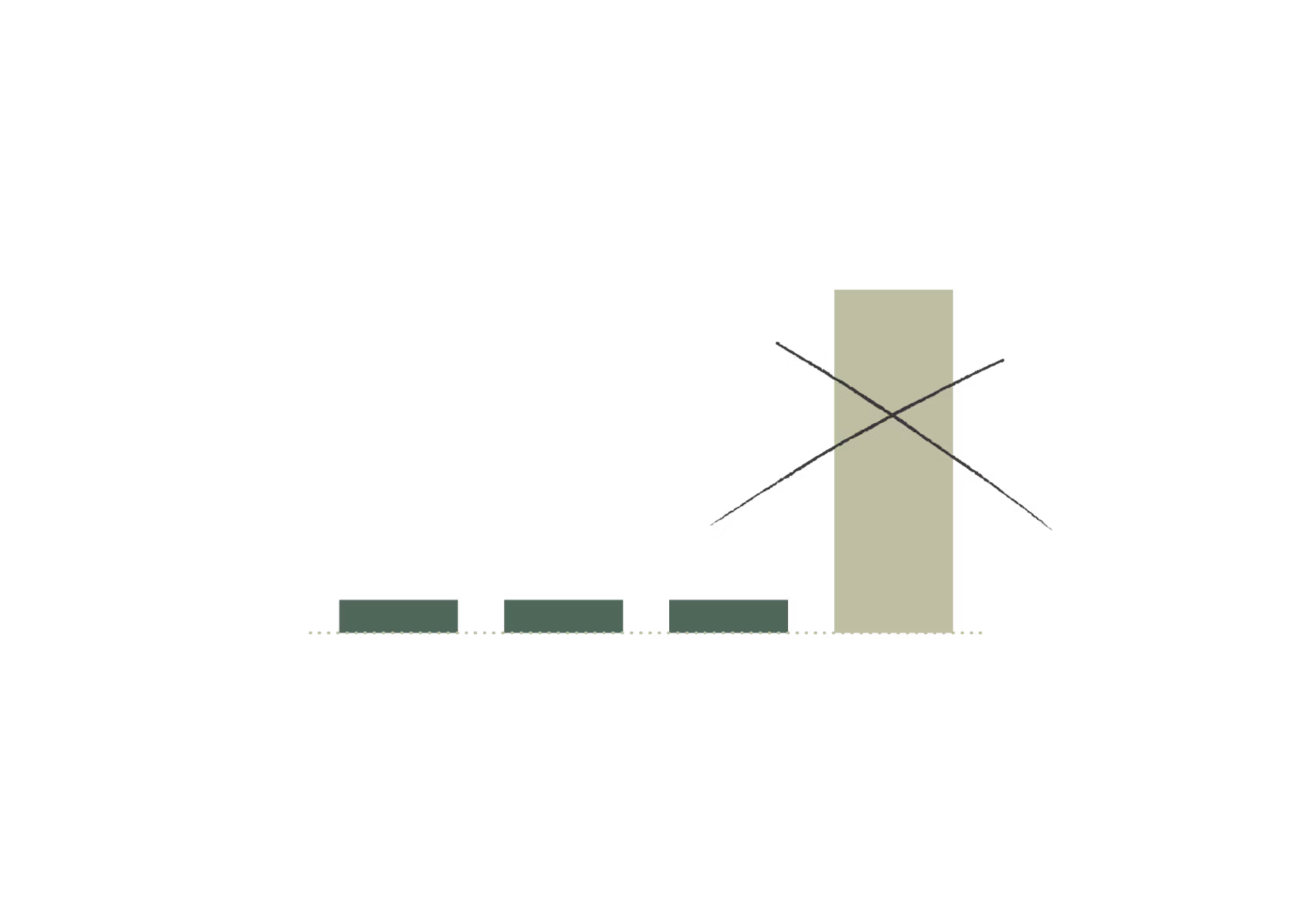
最终触点归因 模式为获得简便性付出了一定的代价。通过鼓励广告平台进行推送,以实现尽可能多的点击和查看次数,这种模式导致了一种易于产生欺诈的环境,在这种环境中,所有人都在争夺用户行为的归因,无论他们是否是用户行为产生的真正原因。这种模式并未将品牌价值、自然行为、电子邮件营销、推送消息或其他外部因素的作用排除在外,所以无法清楚获知您的广告平台所贡献的真实价值。

It can't provide you with a clear understanding of the actual value your vendors are contributing because it doesn't account for brand equity, organic behavior, email marketing, push notifications or other external factors. This also makes it difficult to answer a common concern for performance teams: are multiple partners being paid for users who would have converted anyway?

Incrementality provides a way to test this directly. If a conversion would have happened without the campaign, it appears in the control group's baseline. Only the difference between exposed and unexposed groups counts as incremental value.


坚持创新 永无止境

我们的增量解决方案

Ghost Bids

自 2016 年开始,我们一直在尝试三种不同的方法: Intent-to-Treat, PSA, 和 Ghost Bids。通过开展数千次测试并开发自有的分析框架,我们创建了基于Ghost Bids的一种方法,该方法可以实现持续投放、免费且可靠的互动效果提升测量。

Causal Impact Analysis

自 2019 年以来,我们一直在开发 Causal Impact 增量衡量框架,这是一种专门针对独立于用户ID运行而设计的方法。借助计量经济学,这款工具能够观察广告活动带来的下载和再互动的增量提升,从而在 SKAdNetwork 指标之上提供有价值的见解。

By comparing identifiable treatment and control sub-markets, Causal Impact can isolate the incremental effect of a campaign from broader trends and organic behavior. This makes it particularly valuable for measuring no-ID traffic, where deterministic attribution alone cannot provide the full picture.

For a comparison of the three test designs, read Incrementality Tests 101: Intent-to-Treat, PSA, Ghost Ads and Ghost Bids.

Incrementality in practice

Incrementality is only useful if the methodology stands up to scrutiny. That means transparent test design, balanced groups and results that can be independently validated.

Miniclip verified the methodology

When Miniclip ran an incrementality test with Remerge for its 8 Ball Pool retargeting campaigns, the team went beyond simply accepting the reported results. Miniclip compared Remerge's randomization data with its own internal behavioral data, including activity, matches played, player level, lifetime value and retention.

Using Distribution Matching, Miniclip found that the treatment and control groups were perfectly balanced across the KPIs it examined - an independent validation of the randomization methodology.

“Remerge's transparent approach towards incrementality testing has made it easy to verify their results from our end.”
- Jamie Lee, Digital Marketing Analyst, Miniclip

Read the Miniclip incrementality study

Socialpoint found its lowest-ever incremental acquisition costs

Socialpoint used Remerge's Causal Impact methodology to measure the incremental performance of User Acquisition campaigns for Dragon City. Over an eight-week period, the teams ran 14 tests and experimented with different creative formats.

The results delivered Socialpoint's lowest-ever iCPI and iCPA figures, while also showing that video outperformed static and native formats in both CTR and conversion rate. The tests gave Socialpoint actionable evidence for how to optimize future UA activity rather than relying solely on attributed performance.

“We are doubling down on building tools that will enable our UA teams to measure actions with 100% incrementality in the event that all other types of measurement move away.”
- Alexandre Noirot-Cosson, Head of Marketing for Live Games, Socialpoint

Read the Socialpoint case study

PhotoSì identified when to spend

For seasonal businesses, performance can change dramatically depending on the time of day, day of week and wider calendar. PhotoSì worked with Remerge on a series of incrementality tests over four weeks, testing supply partners, creatives and campaign timing across ID and no-ID traffic.

The findings showed that weekends and evenings were the strongest times to run campaigns, while video and interstitials were the best-performing creative formats. The predictive model also highlighted the importance of seasonality, helping PhotoSì make more informed decisions about where and when to allocate budget.

“Incrementality testing gives you another perspective of your User Acquisition activity, which you don’t have with a deterministic approach.”
- Manuel Mainetti, PhotoSì

Read the PhotoSì case study

Delivery Hero measured value in a no-ID world

Delivery Hero became one of the first advertisers to use Remerge's incrementality solution for User Acquisition on no-ID traffic. Starting with HungerStation in Saudi Arabia, the teams first ran multiple experiments on ID traffic using different creative formats during peak evening hours.

Those learnings were then used to inform tests on no-ID traffic. The project helped achieve competitive CPI performance, identify campaign elements for future optimization and demonstrate the incremental value of the advertising activity.

Read the Delivery Hero case study

How to run an incrementality test

A successful incrementality test starts with a business question, not a methodology. Before launching a campaign, define exactly what you need to prove.

1. Define the conversion event

Decide what outcome the campaign should create. Depending on your business, this could be an install, registration, purchase, order, re-engagement or incremental revenue. The KPI should reflect the business objective rather than simply the easiest event to measure.

2. Create comparable test and control groups

For retargeting, users should be randomly assigned so that they remain in either the treatment or control group. This is essential for avoiding overlap and ensuring that differences in outcomes can be attributed to the advertising exposure.

For no-ID campaigns, comparable treatment and control sub-markets can be used instead, allowing aggregated data and econometric analysis to measure campaign uplift.

3. Run long enough to generate meaningful data

The right test duration and group size depend on audience volume, expected conversion rates and the size of the effect being measured. A test needs enough data to distinguish a genuine signal from normal variation.

4. Compare outcomes, not just attributed conversions

The control group represents the baseline: conversions and revenue generated through organic behavior, other marketing activities and external influences. The treatment group shows what happened with the advertising campaign running.

The difference between those outcomes is the incremental contribution of the campaign.

5. Use the results to optimize decisions

The value of incrementality is not simply proving whether a campaign worked. Results can be used to compare creatives, audiences, supply partners, times of day, geographies and optimization strategies, and then move budget toward activity that creates genuine additional value.

How to read incremental ROAS

Traditional ROAS measures attributed revenue against advertising spend. Incremental ROAS, or iROAS, focuses only on the additional revenue caused by the campaign.

Incremental revenue ÷ ad spend = iROAS

For example, if an exposed group generates more revenue than a comparable control group, the difference is the campaign's incremental revenue. Dividing that additional revenue by spend gives you iROAS.

Worked examples are in our guide to interpreting incremental ROAS.

The same principle applies to other incremental KPIs:

  • iCPI measures the cost of each additional install generated by the campaign.
  • iCPA measures the cost of each additional conversion or action.
  • Incremental uplift measures the difference in conversion or revenue outcomes between treatment and control groups.

What is a good incremental ROAS?

There is no universal benchmark. A good iROAS depends on your margins, customer lifetime value, payback period and the conversion event being optimized.

For example, an e-commerce app may be able to evaluate incremental revenue directly. A food delivery app with relatively fixed profit per order may prefer to set an iCPA target based on the profit generated by each incremental conversion.

The important distinction is between attributed performance and incremental performance. A campaign can report a strong attributed ROAS while contributing little additional revenue if many of those users would have converted anyway. Incremental KPIs provide the evidence needed to make that distinction.

Frequently asked questions about incrementality

What is incrementality in marketing?

Incrementality measures the additional outcome caused by a marketing activity. It compares the behavior of an exposed treatment group with an unexposed control group to determine whether the advertising created genuine uplift.

How is incrementality different from attribution?

Attribution assigns credit for a conversion to one or more marketing touchpoints. Incrementality measures whether a campaign actually caused an additional conversion, action or revenue outcome. The two approaches can work alongside each other: attribution can provide standardized operational reporting, while incrementality can validate whether attributed results reflect genuine value.

We compare the two approaches in more depth in Attribution vs incrementality: pros and cons.

What is incremental ROAS?

Incremental ROAS, or iROAS, is the revenue generated in addition to what would have happened without advertising, divided by ad spend. It is designed to measure the true return created by a campaign rather than all revenue attributed to it.

How does incrementality prevent double-paying for users?

Incrementality does not attempt to decide which partner should receive attribution for an individual conversion. Instead, it measures the total additional effect of a campaign against a control baseline. If users would have converted without a campaign, that behavior is reflected in the control group rather than counted as incremental value.

Can incrementality be measured without device IDs?

Yes. Causal Impact methodologies can use aggregated data and identifiable sub-markets rather than individual user IDs. This makes incrementality particularly useful for measuring the effectiveness of no-ID campaigns.

How do you know an incrementality test is reliable?

Reliable tests require comparable treatment and control groups, sufficient sample size and duration, clear KPI definitions and a methodology that can be independently verified. Transparency is critical: advertisers should be able to understand how groups were created and validate the analysis with their own data where appropriate.

Should incrementality replace traditional attribution?

Not necessarily. Attribution and incrementality answer different questions. Attribution helps marketers report and operate campaigns across channels, while incrementality helps validate whether those campaigns are creating additional business value. Used together, incrementality can provide an important calibration layer for attribution models.

When should I use incrementality testing?

Incrementality is particularly valuable when you need to prove campaign uplift to leadership, evaluate the true value of retargeting, compare partners or channels, optimize budget allocation, measure no-ID traffic or investigate whether attributed conversions are cannibalizing organic behavior.

Measure what your campaigns actually change

Clicks and attributed conversions can tell you what happened after an ad was served. Incrementality helps answer the harder question: what would have happened without it?

That difference is what performance teams can take to leadership when defending spend, evaluating partners and deciding where the next budget should go.

无须任何隐藏,我们向您毫无保留地解读数据以及其背后的智慧

联系我们
再营销词典
Programmatic Advertising

The automated process of buying and selling advertising space through digital platforms.

Real-Time Bidding (RTB)
real-time-bidding-rtb

The process by which individual ad placements are bought and sold via programmatic auctions that happen instantaneously. With real-time bidding, ad buyers bid on an ad space, which, if the auction is won, instantly displays the buyer's ad. This lets demand-side players such as advertisers or DSPs optimize the purchase of ad placements from multiple sources.

Publisher - 发行商
publisher

发行商是广告生态系统的重要组成部分,因为他们是广告库存的来源。发行商可开发app和在应用商店中发布app。他们的主要目标是通过app获利,通常通过广告库存来实现。

例如,免费游戏、媒体公司等传统发行商的收入几乎全部来自程序化广告。可以将发布者分为自有流量发布商、自运营流量发布商、代管流量发布商三大类:

自有流量发布商和自运营流量发布商拥有广告库存,所有展示所得均归其所有。
代管流量发布商本身没有广告库存,但会与拥有广告库存的发行商保持业务协议。

Probabilistic Attribution
probabilistic-attribution

Refer to: Attribution Methodology

Organic Behavior
organic-behavior

A user’s behavior not directly attributable to specific marketing efforts.

Intent-to-Treat (ITT)
intent-to-treat-itt

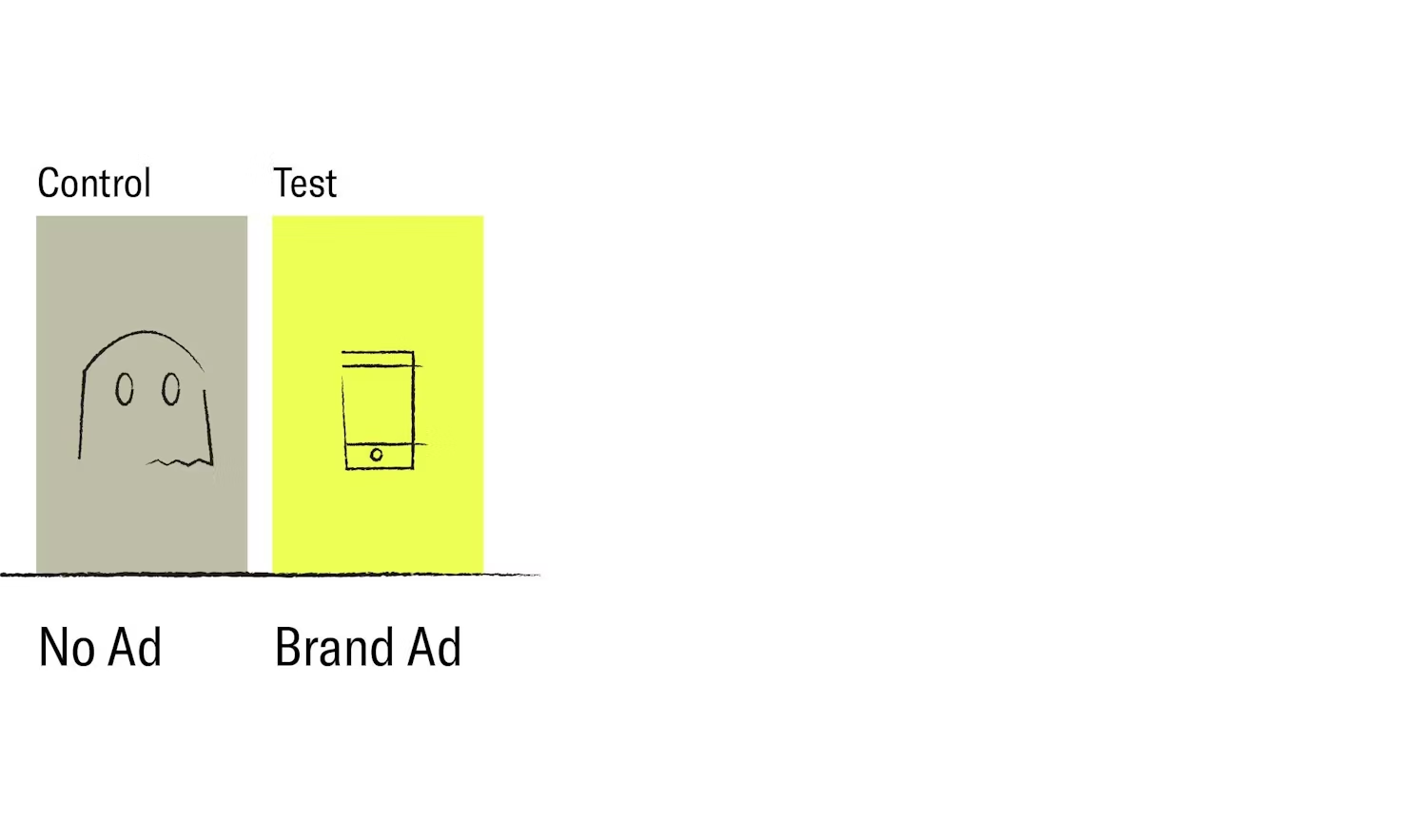
An incrementality testing methodology where no ads from the campaign are shown to devices within the control group. Also known as a ‘holdout test’. Cost-free and easy to implement, but with a relatively high level of noise.

This method compares the behavior of all users in both groups. In the test group, this includes both exposed and unexposed users

iRevenue - 增量收入
incremental-revenue-irevenue

该指标反映了与对照组的行为相比,推广活动产生的收入中有多少属于增量收入。

它充分反映了在自然转化和其他营销活动的基础上,再营销活动可产生多少额外收入。公式=已做再营销的收入-未做再营销的收入

Incremental Conversions - 增量转化
incremental-conversions

该指标反映了与对照组相比,本次推广产生的用户转化中有多少属于增量。

用更直白的话来说,增量转化是推广活动带来的转化。之所以为增量,是因为如果不展示您的广告,则不会发生这些转化。

增量转化 = 实验组转化 − 对照组转化(已放大至与实验组同样规模)

Ghost Ads
ghost-ads

A testing methodology that shows devices in the control group an ad ran by another advertiser on the platform, therefore removing any additional cost for clicks and impressions. The control group behavior is then marked with a ‘ghost impression’, which gives the information on which control group users would have been exposed.
further reading
Deterministic Attribution
deterministic-attribution

Refer to: Attribution Methodology

Attribution Window
attribution-window

A specific time frame that is taken into consideration when determining the source of a user’s action.

Causal Impact Analysis
causal-impact-analysis

A measurement framework developed by Google that works without device IDs. It measures the incremental uplift of one or more conversion events, removing the influence of other campaigns and organic conversions. Used to assess the effect of ID-less campaigns.

Similar to measuring the effect TV ads have, the principle is based on running campaigns on identifiable sub-markets (test group), while leaving other sub-markets unexposed (control group).

Multi-Touch Attribution
multi-touch-attribution

Refer to: Attribution Methodology

In-app Events - 应用内事件
in-app-event

用户采取的应用内操作,例如登录、注册、完成教程,或进行购买。

上述事件可由移动数据监测平台进行追踪,使广告主能够使用在设置活动策略的早期阶段定义的绩效指标(KPI)来衡量其推广活动的效果。

追踪应用内事件能使广告主更好地了解用户行为模式,并设定合理的用户分组。

Identifier for advertisers (IDFA)
identifier-for-advertisers-idfa

A unique random device identifier Apple generates and assigns to every iOS device. Advertisers can use this to track user activity across apps, show them personalized ads, and attribute ad interactions.

Exposure rate - 曝光率
exposure-rate

在执行Uplift测试时,曝光率是指实验组中已展示广告的用户数量。
曝光率包含实验组中收到至少一条展示的所有唯一用户(UU)。理想的目标在于提高曝光率。

Attribution Provider (AP)
attribution-provider-ap

A role played by an MMP to credit the in-app activity of users to the correct media sources.

Android Advertising identifier (AAID)
android-advertising-identifier-aaid

Also known as Google Advertising Identifier. A unique device identifier that Android generates and assigns to every device. Advertisers can use this to track user activity across apps, show them personalized ads, and attribute ad interactions.

Advertisers - 广告主
advertisers

广告主是指通过广告适时向正确的受众传达正确的信息,以实现销售业务和发掘销售线索的个人或法人。
在移动广告中,广告主身处客户端,是致力于推广app的人员。

Ghost Bids
ghost-bids

Ghost bids是Remerge用于增量推广活动的出价策略,通过将用户分为实验组和对照组来追踪收入和转化。

这种方法不会产生额外成本,且噪声最低。我们使用这种方法追踪归属于目标分组、且出现在RTB广告交易平台上的所有用户(无论是否对该用户出价)的收入和转化。理想的目标用户群会被分为实验组(接触广告)和对照组(不接触Remerge发布的广告)。

DSP - 需求方平台
demand-side-platform-dsp

一个允许广告主跨程序化渠道购买广告库存的平台。此类平台旨在代表广告主进行出价,以赢取所需的广告位,并优化实时竞价的支出。
通过广告交易平台执行的实时出价过程会在用户的计算机加载页面或应用时,在几毫秒内完成。这种强大技术使广告主能够根据用户所在的位置和/或行为,自动购买图片广告、视频广告、移动广告等多种广告位。

Variable Bidding
variable-bidding

The dynamic adjustment of bid prices based on a user's in-app behavioral patterns, contextual information, time of day, and ad placement performance.

DCA - 动态内容广告
dynamic-product-ad-dpa

动态内容广告是基于用户行为实时创建的,旨在根据每位用户的行为、偏好和意图提供为其量身打造的体验。动态内容广告分为多个不同素材格式,并包含许多自定义的广告素材。

动态内容广告可以基于用户之前的行为和从定期更新的产品信息流中获取的信息,在几毫秒内即可动态合成。

UA - 用户获取
user-acquisition-ua

吸引新用户下载和/或购买您的应用的过程。用户获取是移动端营销策略的重要组成部分,可以分为两种主要的活动类型:付费(通过移动广告网络或社交媒体渠道中的广告)和非付费(包括应用商店优化和在自有的渠道上提进行推广,以推动自然下载)。

由于移动端用户获取的目标是吸引用户安装应用,因此广告主应从试运营阶段即开始筹划,在应用的整个生命周期内执行用户获取活动,以不断吸引有价值的用户。

Retention Rate
retention-rate

The share of users active in the app within certain time frames after install, reengagement, or other events.

Retargeting
retargeting

A type of marketing channel used by an app owner to engage with their existing users through other channels within the same device. Usually, the aim is to encourage users to complete a particular task e.g. completing a purchase, buying in-game currency, placing a first order. The conventional way of retargeting relies on user IDs, such as AAID and IDFA.

Randomised control trial - 随机对照试验(RCT)
randomised-controlled-trial-rct

在增量策略中,如果我们随机将用户分为实验组和对照组,以避免任何类型的偏差,并且可以切实评估我们通过广告产生的影响,这种方法即是随机对照试验(RCT)。通常划分试实验组/对照组的比例是80/20。

阅读更多:实验组和对照组

延伸阅读
MMP - 移动数据监测平台
mobile-measurement-partner-mmp

移动数据监测平台,即归因合作伙伴,提供可以记录app用户事件的归因数据的平台,例如广告展示、点击、安装、应用打开、注册和其他转化事件。

利用这些数据,广告主可以确定将哪些来源归为付费推广,并了解这些营销活动的有效性。

LTA - 最终触点归因
last-click-attribution

移动数据监测平台使用的一种普遍方法,可将用户的最后一次操作和对应的广告点击匹配起来。

在移动端广告环境下,根据这种模型,最后获得点击的买方平台将获得归因。当用户经点击某广告后进行购买时,促成用户的最后一次点击的买方平台会获得本次转化事件的归因。如果用户多次点击同一广告,且每次都来自不同DSP的作用,则只有最后一次点击有效。这种最终触点归因模型不会考虑在用户的整个转化路径中用户之前的所有触及次数。

KPI - 关键绩效指标
key-performance-indicator-kpi

广告主设置的用于跟踪推广业绩的关键指标或数据点。

设置绩效指标是数字广告活动确定目标,以及需要衡量的成功指标的第一步。绩效指标的类型取决于每次推广的目标和性质。常用的KPI包括iROAS、iCPA、iRev等。

iROAS - ROAS增量
incremental-return-on-ad-spend-iroas

实验组收入(接触广告)和对照组收入(不接触广告)之间的差值,除以广告投入的金额。ROAS增量反映了推广活动的有效程度。只计入因再营销广告而进行购买(无关自然转化)的用户行为,因此是用于计算推广活动的具体影响的出色指标。iROAS > 100%表示该推广活动产生的增量收入超过推广成本,或换句话说,ROI为正值。想想看,公司花在广告上的每1美元都能获得5美元回报,则公司获得4美元利润。公式=增量收入/广告支出。

ROAS - 广告支出回报率
return-on-advertising-spend-roas

用于衡量公司花在广告资源上的每一笔钱所产生收入的关键指标(KPI)。

通过计算广告支出回报率,广告主可以确认广告预算是否产生了足够的收益。广告支出回报率大于1时,表示推广活动产生的收入高于支出。

进行再营销时,ROAS增量(也即iROAS)可以显示广告推广对收入的实际影响,同时也排除了用户获取或自然转化带来的收益。ROAS增量等于增量收入除以推广成本。通过跟踪这个指标,广告主可以评估推广活动的成功程度,并做出相应优化。

公式:广告支出回报率=广告活动带来的收入/广告成本

Supply-Side Platform (SSP)
supply-side-platform-ssp

A company that works with publishers to sell ad inventory across ad networks.

Open RTB
open-rtb

A digital marketplace where ad inventory from multiple publishers are available for advertisers to bid on in real time.

See also: Real-Time Bidding

Self-Attributing/Reporting Network - 自归因渠道
self-attributing-network

自归因或自报告渠道,也即业内所熟知的自圈地自规则的渠道(walled gardens)。它们包括Google、Facebook和Twitter这样的大型平台,会自行对推广活动归因,且不支持第三方归因平台的追踪链接。

与通过第三方测量工具(移动数据监测平台)实施推广并获得归因结果的独立参与者不同,自归因渠道是封闭的生态系统,由广告网络其本身决定和控制所有操作。

Public Service Announcement Ad (PSA Ads)
public-service-announcement-ad-psa-ads

An incrementality testing methodology where devices in the control group are shown PSA ads, like donation drives or road safety reminders. By serving real ads, information on the devices within the control group that would have been exposed can be obtained. Unexposed devices are excluded from the measurement to reduce noise.

LTV - 生命周期价值
lifetime-value-ltv

一项用于计算用户价值的指标。生命周期价值是指用户在与app保持互动期间,预计可以贡献的收入和利润。

了解生命周期价值指标,可以帮助广告主明确最有价值的用户细分群体,以在投资广告活动时做出明智决策。

再营销是一种旨在提高全周期价值的营销策略。通过对用户实施再营销,广告主有更高的机会让用户继续使用app,从而提高他们的终身价值潜力。

Attribution Methodology - 归因方法
attribution-methodology

一种用于确认哪些转化是源于之前的点击或展示的方法。

延伸阅读
View-Through Attribution
view-through-attribution

Refer to: Attribution Methodology

‍

Uplift Report - Uplift报告
uplift-report

由Remerge生成的报告,可使Remerge的客户了解在自然转化和所有其他营销渠道转化之外所生成的增量收入(Incremental Revenue),以此评估基于增量收益(Incrementality)推广所产生的提升效果。

Uplift报告通常会提供测量结果和计算得出的KPI的值。测量的数值包括广告支出、不同受众组的规模、转化量、转化的用户群体和每组的收入。所有其他KPI均使用上述值进行计算。

Segment - 受众分组
segment

受众分组是将具有相同行为模式的用户归为一组,这些行为模式包括活动等级、购买总额或总量,或者他们最后一次打开您应用的时间。

QPS - 每秒查询率
queries-per-second-qps

一项用于表示DSP(需求方平台)可对广告投放出价并推送广告给用户的频率的绩效指标。在实际出价时,QPS容量越大,对这些出价实施分析和执行的请求/查询的次数就越多。

Incrementality - 增量收益
incrementality

我们通过区分自然流量和付费安装来衡量营销效果的方法。

移动营销行业存在一个常见问题:我们并非始终能够将自然流量和付费安装区分开来。这可能导致营销支出计算结果出错,甚至,更糟糕的是,导致营销人员为自然安装付费。我们可以通过测量增量来解决这些问题,显示您的营销推广活动的影响,以及自然流量贡献的比例。利用此类信息,您可以掌握每次增量转化的成本(因营销活动带来的安装),并进一步拓展相应渠道。

Impression -(广告)展示
impression

用户对所展示的广告的一次观看。

Deep link - 深度链接
deep-link

深度链接是可将用户直接引导至应用内,而不是引导至网站或商店的一种链接。在移动广告中,深度链接用于将用户引导至特定的应用内位置,让用户更轻松、更快捷地到达他们查找的特定页面。

通过映射营销漏斗层面的每个相关事件,并将其与对应的深度链接配对,广告主可以直接将用户引导至特定的应用内位置,例如特定的登录页面或转化点。

深度链接通过将用户重定向至具体的转化点,提供无缝的应用打开体验,由此提供更流畅、更个性化的体验,进而带来盈利机会和更多互动。

Contextual targeting
contextual-targeting

A type of targeting that works with contextual signals only, such as location data (country, city, postal code), language setting, mobile operating system, device model, as well as publisher information.

App Monetization - 应用变现
app-monetization

应用开发人员或发行商所采用的通过其app赚取收入的业务模式。

Uplift Test
uplift-test

A randomized control trial test conducted by Remerge to measure the incremental impact of one or more campaigns.

See also: Randomized Controlled Trial

SKAdNetwork
skadnetwork

Stands for Store Kit Advertising Network. Apple’s measurement framework for tracking mobile attribution. Introduced in 2018 and widely implemented in 2020 with the iOS 14.5 update.

Reshuffle - 重置分组
reshuffle

重置分组表示用户曾经是测试或对照组的一部分时的随机性和标记。

在增量测量中,针对特定app重置分组是为了对抗随时间积累的偏差(例如某些用户来自未接触过我们任何广告的组,而其他组

则不断接触到我们的广告)。重置分组适用于测试已经运行很长时间,以及/或推广在推广设置、用户分组或创意策略方面经历大幅调整的情况。

iCPA - 每次操作的增量成本
incremental-cost-per-action-icpa

这项指标(在我们内部也被称为每次增量转化的成本)使广告主能够确定使用户进行转化或购买所花费的增量成本。

查看用于设置目标和评估绩效的每次增量转化的成本(iCPA),对未能通过追踪收入或无法从应用内事件流获取收入信息的这类业务模型尤其适用。公式 = 广告支出/增量转化

General Data Protection Regulation (GDPR)
general-data-protection-regulation-gdpr

A regulation under the EU (European Union) law on data protection and privacy within the EU and the EEA (European Economic Area), that grants users control over how their data is stored and used by organizations. To comply with GDPR, programmatic sellers must clearly communicate to users how their data will be stored and used. When a user gives consent to an organization to process their data, it enables targeted advertising.

Test group - 实验组
test-group

在增量测量中,实验组是至少接触了一次广告展示的用户群体。在计算广告是否与总的转化率相关时,会将他们的行为纳入考虑范围,并与未接触相同广告的组(对照组)进行比较来得出见解。

见对照组。

Control group - 对照组
control-group


对照组也被称为保持组,是一项推广活动中不会对其展示任何广告的一组用户。对照组不展示任何广告,因此能够评估在不受广告影响下,自然发生的转化次数。对照组的规模一般比实验组要小。

见实验组。

延伸阅读
CCPA - 加州消费者隐私法案
california-consumer-privacy-act-ccpa

加州消费者隐私法案(CCPA)是一项增强美国加州居民的隐私权和消费者保护的法案。该法案于2020年1月1日生效。CCPA为消费者提供以下权利:

- 了解收集了有关他们的哪些个人数据。
- 知道他们的个人数据被出售或披露的对象是谁。
- 可拒绝出售个人数据。
- 访问他们的个人数据。
- 要求企业删除从该消费者那里收集到的与该消费者有关的任何个人信息。
- 即使在行使隐私权时,也享受平等的服务和价格。

Programmatic Advertising
programmatic-advertising

The automated process of buying and selling advertising space through digital platforms.

Attribution - 归因
attribution

移动端归因是一种匹配数据点的方法,例如将展示或点击与对应的应用安装和安装后事件匹配,或基于某些变量将广告支出归因于用户互动或安装。

归因解析了在用户与广告互动时会发生什么,但仅与每位用户与事件的及时联系相关,而不会考虑可能导致转化的其他影响因素。

常见的归因模型包括点击归因、展示归因、最终触点归因和多触点归因。

App Tracking Transparency (ATT)
app-tracking-transparency-att

The privacy framework from Apple that, among other things, manages the process of obtaining user consent before accessing their Identifier for Advertiser (IDFA).

Real-Time Audience Segmentation
real-time-audience-segmentation

The division of an audience into distinct segments based on real-time events, thus enabling targeted advertising and alignment with a user's behavioral patterns and preferences.