A Glimpse into Asia’s App Growth
On April 15, 2026, Remerge hosted App Talkin Seoul 2026, an app marketing event centered on one big question: “What does it take to grow an app in Asia today?” The event explored AI‑driven campaigns, retargeting in the privacy‑first era, and effective growth strategies - offering app marketers a practical blueprint for success.
Through sessions such as AI in Asia 2026, Retargeting Revival in the Age of Privacy, and 2026 Gaming Patch Notes, the program highlighted both challenges and opportunities, painting a clear picture of how apps can thrive in Asia’s quickly-evolving digital landscape. Below is a look at how the day unfolded and what marketers can take away.
Dive in below for video recaps, photos and summaries of the guest talks that took place.
Sensor Tower: AI Trends in Asia 2026
In 2025, AI moved beyond being just a technology trend and reshaped the global ecosystem. With 3.8 billion downloads, $5 billion in revenue, 480 hours of time spent, and 1 trillion sessions, the sheer scale of these figures demonstrates the explosive growth of AI. What stands out most is the 240% year-over-year increase in sessions, a clear sign of surging user engagement.
Asia has emerged as the driving force behind this momentum, recording growth far above the global average. South Korea alone saw 54 million downloads - double the previous year - and revenue skyrocketed sixfold to $235 million. Japan, Vietnam, China, and other Asian countries also achieved more than double growth, confirming that the center of gravity in the AI ecosystem is shifting toward Asia.
Within this surge, the rapid expansion of AI assistants is particularly noteworthy. ChatGPT and Gemini have evolved far beyond simple assistant roles, continuously expanding their capabilities and securing cross-platform market share across Asia’s top five markets. While web-based access was dominant until 2024, by late 2025 the momentum had clearly shifted toward mobile apps, cementing the importance of mobile-first strategies. This pivot has fueled dramatic increases in both in-app engagement and overall audience size, prompting marketers to shift from traditional SEO-focused tactics to GEO strategies. In places such as South Korea and Vietnam, AI is now woven into everyday life, and advertising has diversified to reflect distinct cultural and national identities.
The Asian AI market can be defined by three major trends. First, Asia has become the global center of AI growth. Second, AI is expanding beyond workplace assistance into everyday life, reshaping the ecosystem. Third, success now depends on quickly identifying trends and responding with tailored strategies. For companies and marketers, it is no longer enough to simply adopt AI; they must design diversified strategies that reflect Asia’s unique growth patterns and audience characteristics.

Remerge X AppsFlyer: iOS Retargeting Revival in the Privacy Era
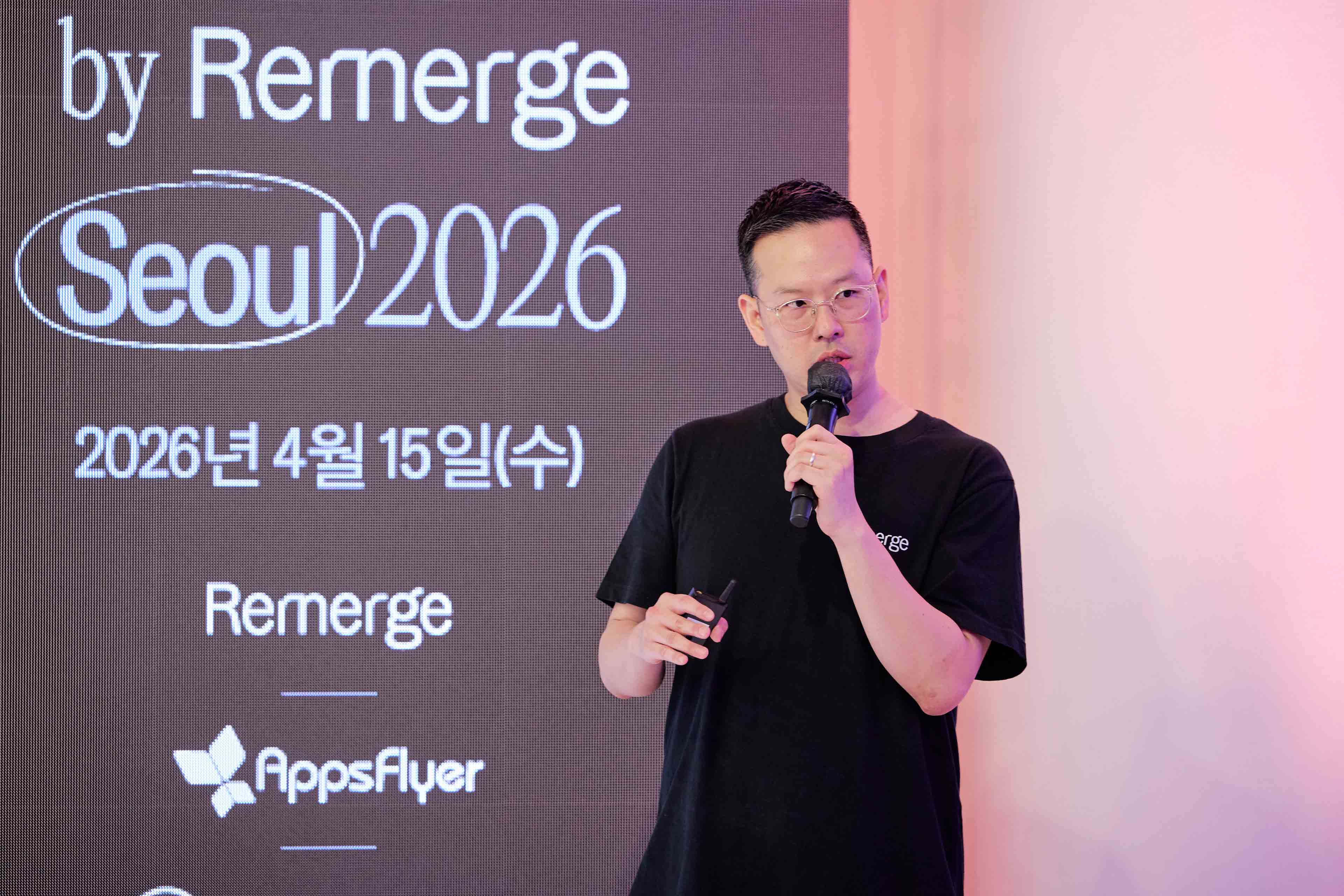
The mobile marketing industry is entering a new era shaped by privacy. In one session, Hide Cho, Senior Regional Director for Korea & Japan at Remerge spoke toAppsFlyer’s Dae-hoon Jung, Director of Customer Success for Korea & Japan about how these changes are fueling the resurgence of iOS retargeting. They covered macro trends such as antitrust regulations and the halting of Google’s Privacy Sandbox, as well as micro factors like ATT opt-in rates, probabilistic modeling, and probabilistic targeting on iOS. Together,they provided a comprehensive view of the challenges and opportunities that today’s app marketers face.
When Apple introduced ATT, many believed the data had disappeared. In fact, conversions remained, but visibility became blurred. While Android leads in user volume, iOS delivers far greater value per user. Retargeting conversion rates highlight this disparity: Android increased by 31%, while iOS surged by 381%. As a result, marketers are once again expanding iOS budgets, combining deterministic matching via user IDFAs and deep links with probabilistic matching powered by contextual signals to achieve more precise targeting.
Probabilistic modeling has emerged not as a replacement but as a complement -bridging the gaps where deterministic signals are missing. Tests have demonstrated strong reliability, with 75% coverage and 98% accuracy. In live campaigns, this approach translated into a 110% lift in conversion rates and a 15% improvement in cost efficiency.
The revival of iOS retargeting can be explained through three pillars: the gradual rise in ATT opt-in rates, the advancement of targeting technologies, and the complementary role of probabilistic modeling. AppsFlyer recovers lost signals, Remerge optimizes and scales them, and together these solutions form a new growth formula for iOS marketing.

AppsFlyer: From MMP to AI Marketing Cloud - the New Vision
AppsFlyer is evolving beyond its role as a Mobile Measurement Partner (MMP) to become a comprehensive AI Marketing Cloud. Building on its strengths in data accuracy and mobile optimization, the company is now extending these capabilities to the web, enabling major platforms to directly optimize for web conversions. With a unified dashboard across apps, web, and consoles, AppsFlyer delivers three core values:
1. Real-time postbacks,
2. Media optimization,
3. Campaign performance improvement
All of this helps to create an environment in which marketers can more effectively drive results.
What stands out most are the AI-powered updates. On the audience side, AI learns and optimizes to build more precise targeting segments. On the creative side, the Creative Analytics solution automatically organizes and analyzes vast volumes of ad assets, predicting performance outcomes. High-performing creatives can be instantly synced with Meta accounts, enabling AI to manage large-scale analysis and optimization tasks that would be impossible for humans to handle manually.
Privacy remains central to this transformation. Through its Privacy Cloud and Signal Hub, AppsFlyer enables secure collaboration without compromising personal data. Partnerships with global players like Mastercard are already underway. LLM-powered conversational dashboards, a suite of agents currently in beta, and interfaces directly connected to the agent builder tool further enhance this ecosystem, allowing marketers to focus on creativity and strategy rather than routine tasks. AppsFlyer is redefining itself as a modern marketing cloud, embedding AI across platforms, audiences, creatives, and signals to drive transformation at speed.
Gojek: Smarter Campaigns with Machine Learning
Shindu Ramandita, Senior Performance Marketing Manager at Gojek, shared how the company is using machine learning to enhance performance across the entire marketing funnel. As Southeast Asia’s largest on‑demand platform, Gojek operates in Indonesia and Singapore with more than 3 million driver partners. Like many in the industry, the team has faced rising media costs, restrictions on data usage, and challenges in measurement. To address these, they defined clear problems and goals at each stage - awareness, consideration, acquisition, and retargeting -while focusing on both efficiency and impact.
At the awareness stage, Gojek adopted a hybrid strategy that combined reservation and auction models to maintain efficient CPMs while expanding reach. For acquisition, the team collaborated on a four‑month project using Firebase’s tROAS functionality, which drove large‑scale new user growth and delivered up to a 40% increase in MAU. In retargeting, experiments with Demand Gen and GDA strengthened conversion‑focused strategies, shifting the emphasis from traffic volume to securing high‑quality users who contribute to real business growth. Shindu emphasized that balancing marketing goals with cost efficiency was the central challenge and shared the diverse approaches tested at each stage.
The standout innovation was the use of predictive models powered by machine learning. Since 2024, Gojek has been using XGBoost to handle non-linear relationships between variables. This enabled the company to predict performance with up to 90% accuracy at D+1, without waiting for the 7-day attribution window. As a result, budgets could be optimized from day one based on CPB, with flexible investment strategies across channels depending on peak and off‑peak seasons. When prediction accuracy declined, the team intensified monitoring, interpreting larger errors as signals of performance deterioration and scaling back budgets accordingly.
Collaboration was another key driver of success. By partnering with companies like Remerge, Gojek shared machine learning predictions and target values to improve visibility and ensure alignment. This approach showed how combining predictive modeling with strategic partnerships can amplify marketing results and lay the foundation for sustainable growth.
trifa Inc. - Japan vs. Taiwan - Growth Marketing Insights
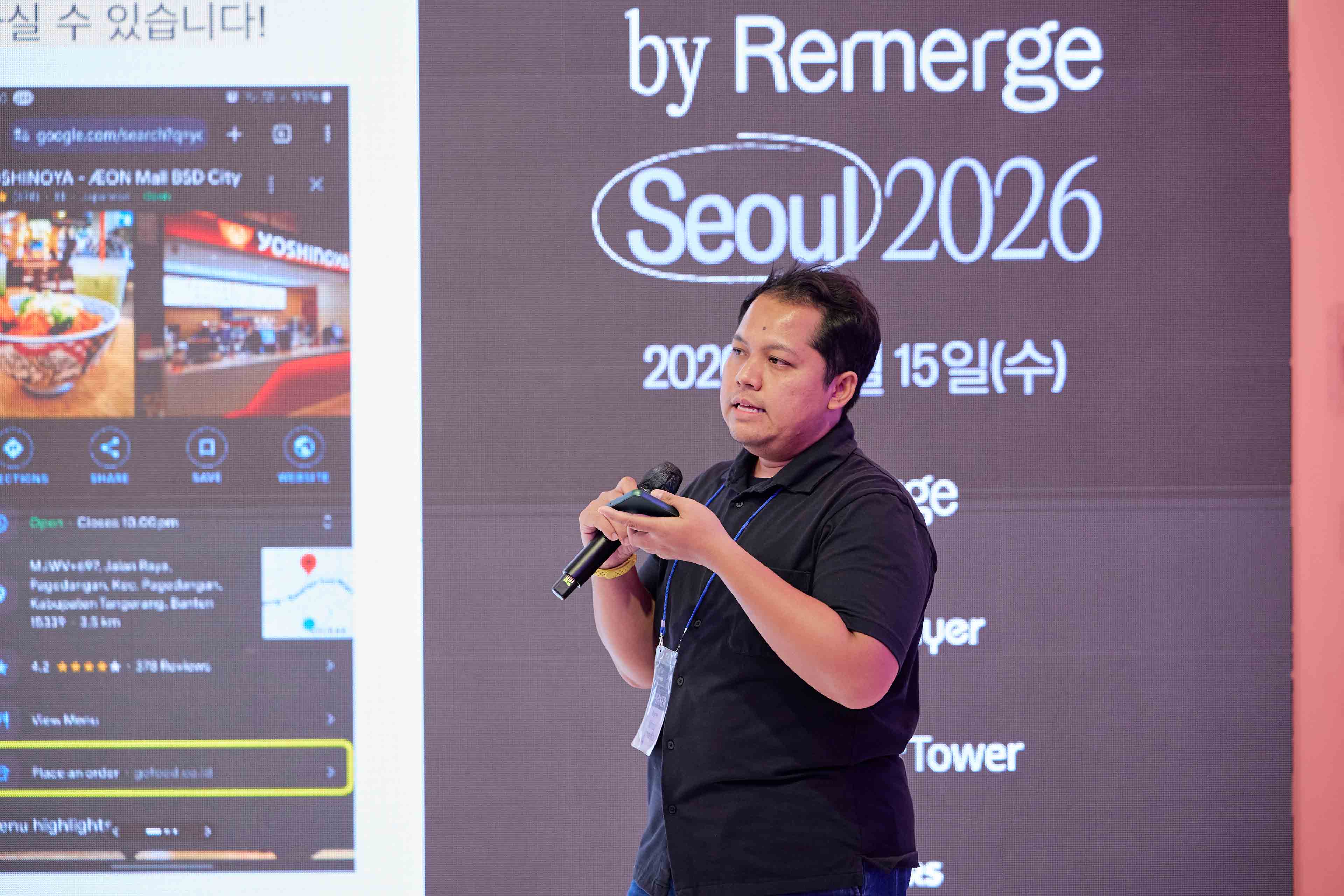
In the following session, Yusuke Oe, Head of Global Business at trifa Inc. - a company providing eSIM services in over 200 countries - shared how user‑experience‑driven strategies and localized marketing approaches helped deliver strong results. He compared growth marketing in Japan and Taiwan, highlighting both the similarities and the unique differences between the two markets.
In Japan, success was built on several key pillars: search optimization through “Katakana branding,” an app-first strategy that improved UX and boosted LTV in a virtuous cycle, and sophisticated performance management combining cohort analysis with seasonal strategies. Particularly impressive was the use of CPA-based outdoor advertising and influencer measurement, paired with in-app surveys and coupon codes, to create an effective low-tech strategy that delivered measurable impact.
Building on this, trifa expanded to Taiwan, where a similar media ecosystem and high traveler base made it attractive. By engaging micro‑influencers and forming a local team, the company surpassed 300,000 downloads in 18 months.
Across both markets, the winning formula was clear: localized strategies plus data‑driven decision‑making, enabling sustainable app‑centered growth tailored to each market’s unique traits.

Nexon Korea & Devsisters: Game Growth Strategies for 2026
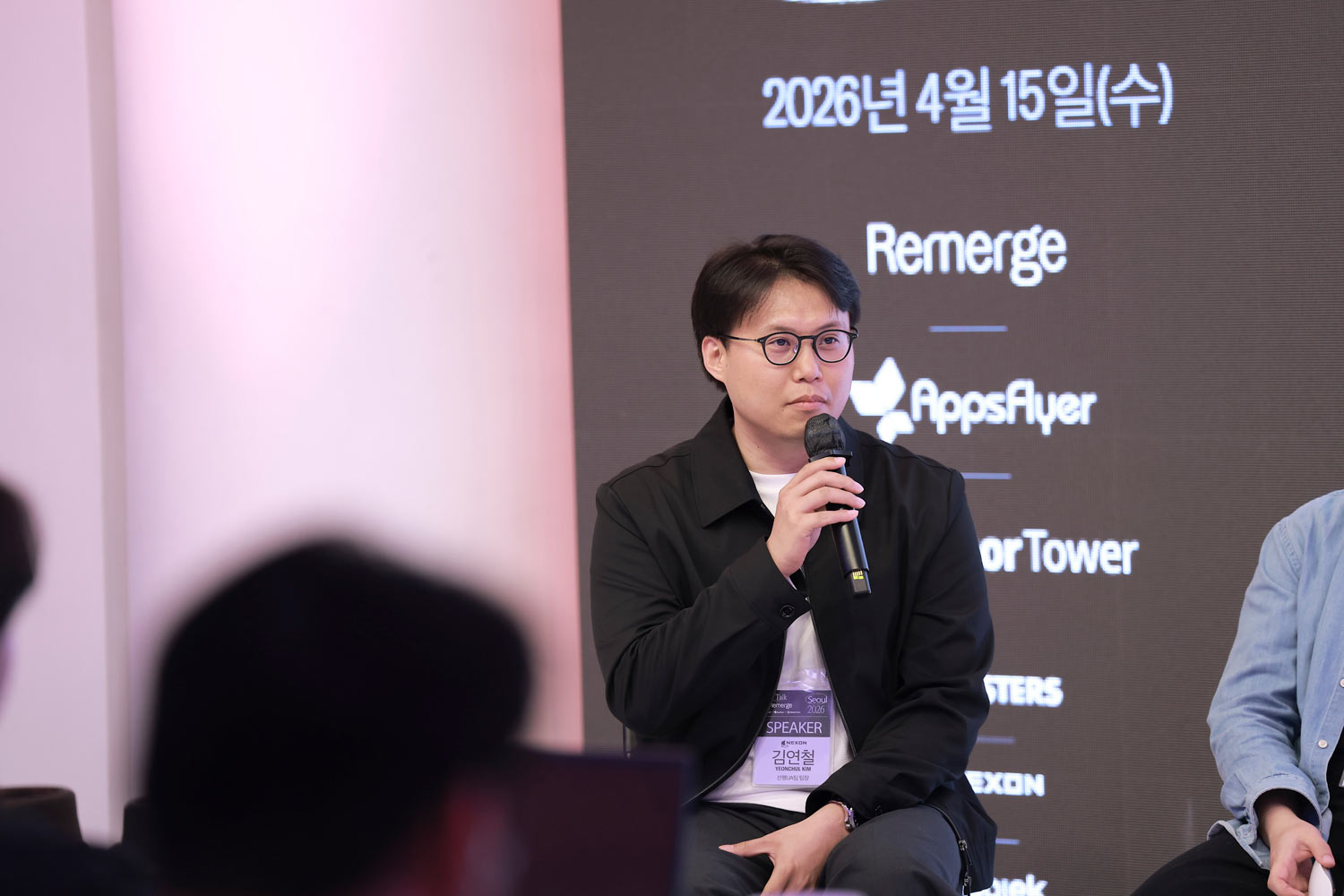
In the final panel about 2026 game marketing strategies, Nexon Korea’s Yunchul Kim and Devsisters’ Hongin Kim shared how they are adapting to industry shifts. Nexon emphasized incremental measurement and user value, focusing on acquiring players who stay longer and contribute more. Devsisters highlighted strengthening the Cookie Run IP fandom and embedding AI across the organization to improve analytics, with retention and re‑engagement as key goals.
The past year brought major changes: platform AI automation made creative assets the main differentiator in UA, rising acquisition costs boosted the ROI of retention marketing, and short‑form content trends reshaped the market toward casual gaming. Yunchul Kim noted that AI has become a basic tool for everything from creative production to media operations, while rapid game influx from global publishers has intensified competition and made marketers care about performance-driven UA.
Looking ahead, Devsisters plans to expand its IP through cultural collaborations and global growth centered on the U.S., working with local creative studios. Nexon is focusing on funnel management and keeping ad creatives fresh, operating media and creatives with segmented strategies tailored to user characteristics. Both panelists agreed that in the next 12–18 months, the defining skills for top game marketers will be data‑driven decision‑making and effective AI utilization.
App Talk by Remerge in Seoul 2026 went beyond sharing industry updates, establishing itself as a platform to shape the future of app marketing in Asia. By bringing together diverse companies and experts, it sparked new possibilities and practical growth strategies in a fast-changing environment. This collective knowledge will help shape a more resilient and dynamic future for Asia’s app industry.


More pictures...