Ep 244: How to test 25 app ideas a month and scale the winners
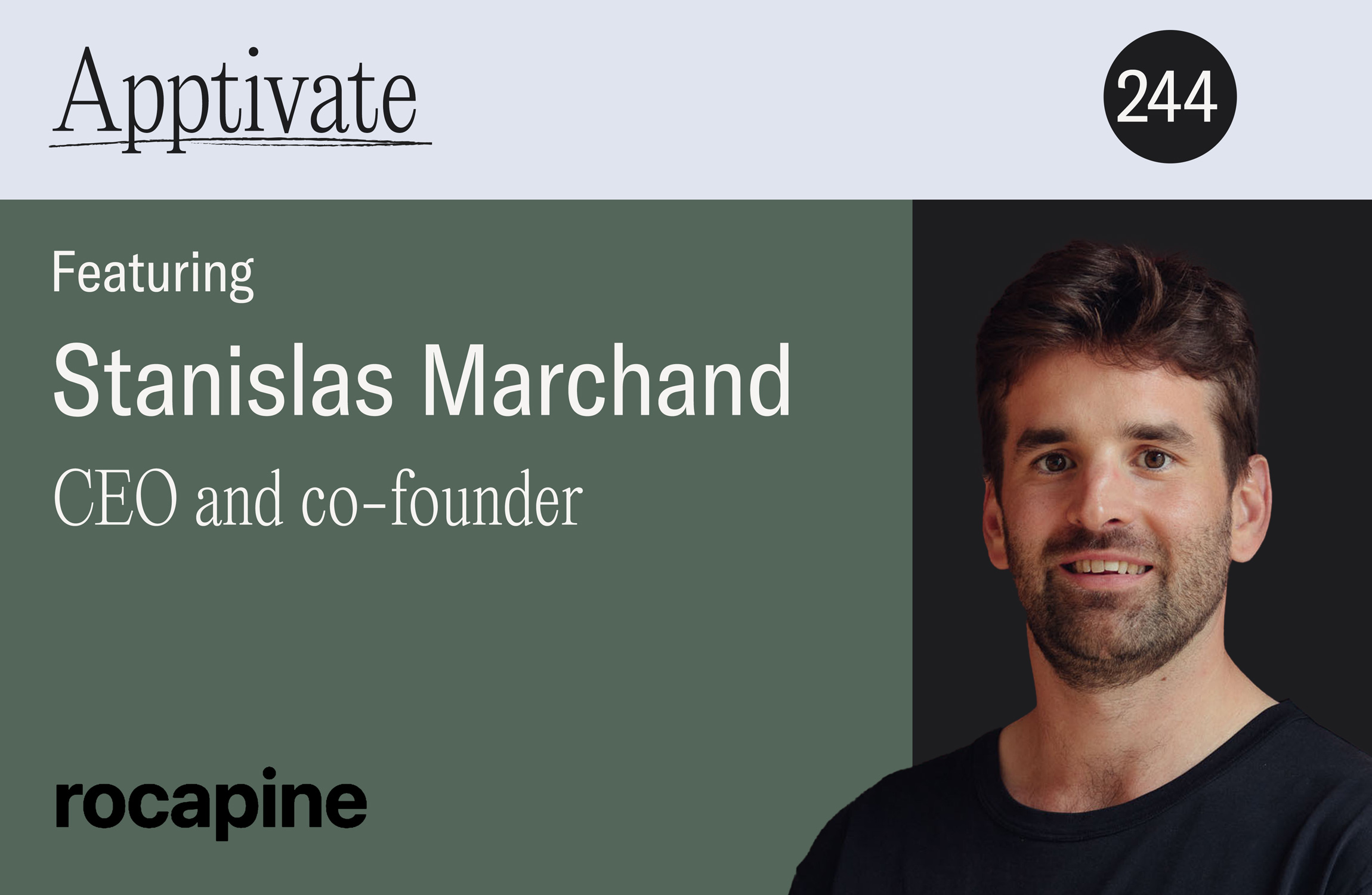
What can wellness app marketers learn from mobile gaming’s rapid-fire approach to testing and scaling? Stan Marchand, founder of rocapine and former product leader at mobile gaming publisher Voodoo, has applied the gaming industry's growth playbook to consumer wellness apps, generating $6 million in revenue, 2.5 million downloads, and five successful apps in just nine months.
In this episode, Stan explains how rocapine tests 20–25 new app concepts every month, uses AI to build functional prototypes in less than a day, and relies on early conversion metrics to decide which products to kill or scale. He shares why high-volume creative testing is one of the most valuable lessons non-gaming marketers can borrow from mobile gaming, why strong product-market fit can't be validated through ad clicks alone, and how combining performance marketing with meaningful user experiences can drive sustainable subscription app growth.
Watch now:
Listen and subscribe:
Listen on Spotify
Listen on Apple Podcasts
Questions Stan answered in this episode
- What inspired Stan to apply the mobile gaming publishing model to wellness apps?
- What do mobile gaming marketers do better than traditional consumer app marketers?
- Which mobile gaming growth tactics should non-gaming app marketers adopt, and which don't translate?
- How does rocapine test 20–25 new app concepts every month?
- How is AI accelerating app development and product-market fit testing?
- Which early KPIs best predict whether a new subscription app has the potential to scale?
- How does rocapine decide when to kill an app concept versus continue iterating?
- What distinguishes rocapine's most successful apps from the hundreds of concepts that failed?
- How can subscription app marketers balance high-volume experimentation with product quality and long-term retention?
- How will AI and increasingly accessible development tools change the competitive landscape for consumer apps?
Timestamps
- 01:19 — Stan’s background at Voodoo and the origins of rocapine
- 05:29 — rocapine’s early failures and lessons from launching apps
- 06:22 — What mobile gaming marketers do better than consumer app marketers
- 07:19 — Creative testing at scale: One angle, 100 executions
- 08:21 — Which gaming growth tactics don’t translate to wellness apps
- 09:07 — Testing 20–25 new app concepts per month
- 10:05 — From idea to prototype: rocapine’s AI-powered development process
- 11:50 — Testing marketability, trial conversion, and willingness to pay
- 12:45 — The earliest KPIs that predict app growth potential
- 14:07 — When to kill an app concept: rocapine’s KPI-driven approach
- 15:22 — Surprising winners and failures in wellness apps
- 16:47 — What rocapine’s successful apps have in common
- 18:20 — How quickly a validated concept can scale with paid ads
- 19:12 — Advice for scaling subscription apps through high-volume testing
- 20:20 — Balancing performance marketing, product quality, and retention
- 21:43 — How AI will change the future of mobile app development and growth
- 23:35 — Rapid-fire questions with Stan
Quotes
- (04:06) "One of the things that AI allows us to do now that was not possible a few years ago is tailor the user journey. So with our apps, we want to have as many experiences as we have users, so we can better understand and address each users' specific needs and pain points."
- (06:10) “We started failing, one time, two times, three times, and I think about the fourth or the fifth app was one of the first successes of rocapine.”
- (06:36) “Mobile gaming is a highly industrialized market. It's about 10 years ahead of consumer apps, especially wellness apps, when it comes to testing large volumes of concepts, creative hooks, geographies, and marketing campaigns. It's a volume-driven industry built around repeatable playbooks. Once you've developed a successful approach, you can replicate it at scale. That's what we wanted to bring to rocapine – an approach that didn't really exist in the wellness app market at the time"